Questions & answers
- Where can I find Cyprus on the global map for travel planning? You'll spot Cyprus in the eastern Mediterranean Sea, making it easily accessible from both European and Middle Eastern travel hubs. Its strategic position offers diverse flight routes for travelers.
- Which continent is Cyprus officially part of regarding its location on the world map? While geographically closer to Asia, Cyprus is politically and culturally considered part of Europe. It's a member of the European Union, influencing its legal and economic ties.
- What are the nearest major landmasses to Cyprus location on world map? Cyprus is closest to Turkey to its north, Syria and Lebanon to its east, and Egypt to its south. Greece lies further to its northwest, highlighting its unique regional placement.
- How does Cyprus's location impact its historical significance? Its pivotal location at the crossroads of three continents made it a valuable prize for ancient empires, including Greek, Roman, and Ottoman. This history is visible in its architecture and traditions.
- What unique geographical features stem from Cyprus's location? The island boasts diverse landscapes, from the Troodos Mountains to stunning coastal plains, all influenced by its Mediterranean climate and proximity to varied continental ecosystems.
- Does Cyprus's location influence its modern economy and tourism? Absolutely. Its warm Mediterranean climate and rich history, coupled with its European Union membership, make it a popular tourism destination and a strategic point for regional trade and shipping.
- How does the Cyprus location on world map compare to other Mediterranean islands? It's the third-largest island in the Mediterranean, larger than Malta but smaller than Sicily or Sardinia. Its easternmost position distinguishes it culturally and geographically from western Mediterranean counterparts.
Ever wondered about Cyprus location on world map? This captivating island nation, nestled strategically in the eastern Mediterranean, acts as a pivotal crossroads of continents. Understanding its geographical placement unlocks insights into its rich history, diverse culture, and appealing travel opportunities. From ancient trade routes to modern tourism, Cyprus's position dictates much of its allure. This guide cuts straight to the chase, detailing its precise coordinates and why its spot on the world map makes it a fascinating destination for American explorers and history buffs alike. Pinpointing Cyprus is simple once you grasp its unique regional context.
Frequently asked questions
Where exactly is Cyprus located on the world map?
Cyprus is situated in the eastern part of the Mediterranean Sea. It lies south of Turkey, west of the Levant region (Syria and Lebanon), and north of Egypt, firmly positioning it at the crossroads of Europe, Asia, and Africa. Its precise coordinates place it strategically in a bustling part of the world.
Which continental region does Cyprus fall under on a map?
Despite its proximity to Asia, Cyprus is politically and culturally identified as part of Europe. It is a full member of the European Union, aligning its governmental and economic structures with other European nations. This dual identity makes its location quite fascinating.
How does Cyprus's location influence its climate?
Cyprus's eastern Mediterranean location blesses it with a subtropical climate. This means long, hot, and dry summers, followed by mild, wet winters. The sea moderates temperatures, preventing extremes and making it an attractive destination for sun-seekers almost year-round.
What countries are closest to Cyprus on a geographical map?
On a geographical map, Cyprus is closest to Turkey to its north, and Syria and Lebanon to its east. Greece is further to the northwest, emphasizing Cyprus's unique position in the southeastern corner of the Mediterranean basin, close to the Middle East.
Does the Cyprus location on world map affect travel time from the US?
Travel time from the US to Cyprus typically involves a flight to a major European hub, followed by a connecting flight to Larnaca or Paphos. While not a direct hop, its European connections make it a feasible, albeit longer, journey for American travelers seeking Mediterranean charm.
Why is Cyprus's location considered strategically important?
Cyprus's location on the world map holds immense strategic importance due to its position as a gateway between Europe, Asia, and Africa. Historically, it has been a crucial naval and trade hub, and today, it remains significant for military presence and international relations in the volatile Eastern Mediterranean region.
Discovering Cyprus Where It Sits Globally
Pinpointing Cyprus location on world map reveals a truly unique geographical sweet spot. This stunning island nation proudly sits in the eastern Mediterranean Sea, an area teeming with history and cultural exchange. Think of it as a natural bridge connecting Europe, Asia, and Africa, a fact that has shaped its identity for millennia.
For those curious about its exact whereabouts, Cyprus offers an intriguing blend of accessibility and strategic importance. It’s closer to Turkey and Syria than mainland Greece, yet culturally, it often leans European. Understanding this position is key to grasping its allure, whether you are planning a trip or simply expanding your geographical knowledge.
| Geographical Feature | Detail |
|---|---|
| Primary Body of Water | Eastern Mediterranean Sea |
| Closest Continents | Asia, Europe, Africa |
| Capital City | Nicosia |
| Island Size | Third largest in Mediterranean |
| Key Neighbors | Turkey, Syria, Lebanon, Israel, Egypt, Greece |
Historically, this island's spot made it a coveted prize for various empires. Everyone from the ancient Greeks and Romans to the Ottomans and British recognized the immense value of Cyprus's location on the world map. This rich past is still visible in its archaeological sites and varied cultural traditions today.
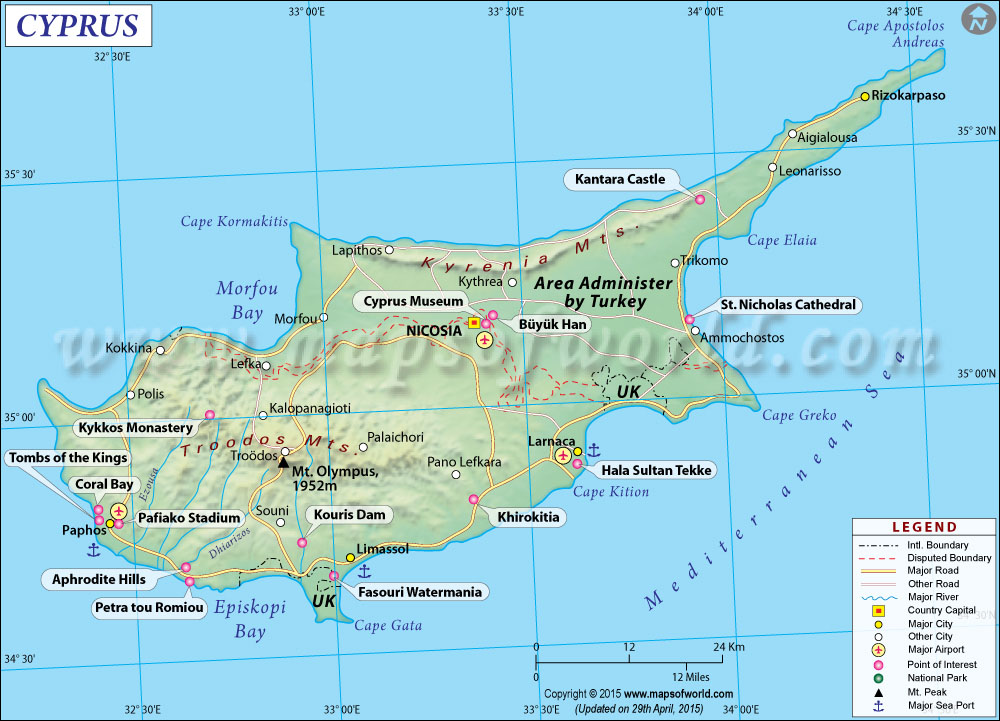
Geographically, Cyprus boasts a diverse landscape despite its island status. You'll find everything from rugged mountains, like the Troodos range, to golden sandy beaches stretching along its coastline. The climate is typically Mediterranean, offering long, warm summers and mild, wet winters, making it a year-round destination.
Its position also plays a role in its unique biodiversity. The island supports a mix of flora and fauna, influenced by its continental neighbors. Exploring its natural parks and coastlines offers a glimpse into this ecological melting pot, a direct result of Cyprus's central location.
Looking at a world map, Cyprus appears small but mighty, punching above its weight in regional influence. It has a significant role in international politics and trade, leveraging its strategic position. This tiny dot on the map truly connects three vast continents, making it a pivotal player.
| Aspect | Impact of Location |
|---|---|
| Historical Significance | Crossroads for ancient empires and trade routes |
| Cultural Diversity | Blend of European, Asian, and African influences |
| Economic Importance | Key shipping routes, tourism hub, regional stability |
| Biodiversity | Unique mix of Mediterranean, Middle Eastern species |
Modern travelers, especially from the U.S., find Cyprus an appealing destination due to its accessibility. Direct flights from major European hubs make reaching this Mediterranean jewel a breeze. Once there, navigating the island is straightforward, with well-maintained roads and clear signage.
Furthermore, Cyprus serves as a convenient launchpad for exploring other parts of the region. Its proximity to destinations like Greece, Turkey, and Egypt opens up exciting multi-country travel opportunities. You can literally island-hop or take short flights to experience completely different cultures within a short span.
The island's distinct identity, shaped by its geographical placement, offers something for everyone. Whether you're interested in ancient ruins, vibrant nightlife, or serene natural beauty, Cyprus delivers. Its location on the world map truly makes it a jewel worth discovering for any avid explorer.
| Benefit | Description |
|---|---|
| Easy Access | Well-connected via European flights for U.S. travelers |
| Regional Hub | Convenient base for exploring nearby countries |
| Diverse Experiences | Historical sites, beaches, mountains, unique culture |
| Strategic Importance | Influential in trade and international relations |
Frequently Asked Questions About Cyprus's Location
Where is Cyprus located on a world map?
Cyprus is prominently located in the eastern Mediterranean Sea. It sits south of Turkey, west of Syria and Lebanon, north of Egypt, and southeast of Greece. This strategic position makes it a geopolitical hotspot.
How can I use local Maps to find Cyprus and plan my trip?
Pull up your preferred mobile Maps app and search for "Cyprus." You'll immediately see its position in the Eastern Mediterranean. You can then route directions from major cities like Nicosia or Limassol to specific attractions and check real-time travel times.
What are the best times to visit Cyprus considering its location?
The shoulder seasons of April to May and September to October are ideal. The weather is pleasant for exploring historical sites and beaches without the peak summer crowds. This period offers comfortable temperatures and good availability for accommodations.
Quick Local Guide to Cyprus Cities
- Nicosia: The divided capital, rich in history and culture. Located centrally on the island.
- Limassol: Vibrant coastal city known for its marina and wine region. Situated on the southern coast.
- Paphos: Home to ancient archaeological sites and beautiful beaches. Found on the southwestern coast.
- Larnaca: Gateway city with an international airport and salt lake. Located on the southeastern coast.
- Ayia Napa: Famed for its stunning beaches and lively nightlife. Positioned on the eastern coast.
Key highlights
Cyprus is a significant island nation positioned in the eastern Mediterranean Sea. Its unique location acts as a natural bridge, linking Europe, Asia, and Africa. This strategic placement has shaped its vibrant history, diverse cultural tapestry, and economic landscape. Travelers often find Cyprus an enticing destination due to its accessibility from multiple continents, offering a distinct blend of European charm with Middle Eastern influences. The island's geographical attributes also contribute to its enviable climate and varied landscapes, from sun-kissed beaches to mountainous terrains, making it a hotspot for a range of activities. Knowing Cyprus's location on the world map helps appreciate its global relevance.
Gallery


Cyprus Maps Facts World Atlas Cy Map GIS Geography Location On Oconto County Plat Data Locator In Travelsfinders Com Travel Concept Country Name The Political Very Macro Close Up View 262571018 Where Is And Mappr Ontheworldmap Highlight Minimal Stock Image Of Displayed Clean Clear Geographic Context Ideal 449106431 2M05M2K Photos High Res Pictures Images Flag Located Island A Europe.


Location Icon Of Cyprus On The World Map Round Pin Vector Where Is Island A Europe Position Global Oconto County Plat Located In Syria History Flag Facts Britannica Mappr With S Body Stock Pins 3de4cx8 Large General Asia Mapsland Maps Atlas Cy Public Domain By PAT Free Open Source Blu Ontheworldmap Com R Mapporn VRYAZT9Y3NT41.


Where Is Cyprus Maps And Facts Mappr Division Map Main Cities Of Collection World Atlas Districts Large Asia Mapsland The Detailed Travel Road Free Printable Country Location Black White Discover With Max In Travelsfinders Com On Oconto County Plat A0BBE19C98CEA8838525B4EEA33A336F Cure For Curiosity A.