Questions & answers
Latest Most Asked Questions about What is Avoidance Avoidance Conflict in Psychology
Welcome to our comprehensive FAQ-style blog post, your ultimate guide to understanding avoidance-avoidance conflict in psychology. This resource is meticulously updated to bring you the freshest insights and answers to the questions people are actively asking right now. We've delved deep into common queries, providing clear, concise, and actionable information to help you grasp this challenging psychological phenomenon. Whether you're grappling with a tough decision or simply curious about human behavior, this guide will illuminate the complexities of being caught between two undesirable choices. Get ready to explore the dynamics, identify personal triggers, and discover effective strategies for navigating these frustrating impasses in your life. Our goal is to make these complex psychological concepts accessible and relatable, empowering you with knowledge.
Understanding the Basics of Conflict
What is an avoidance avoidance conflict in psychology?
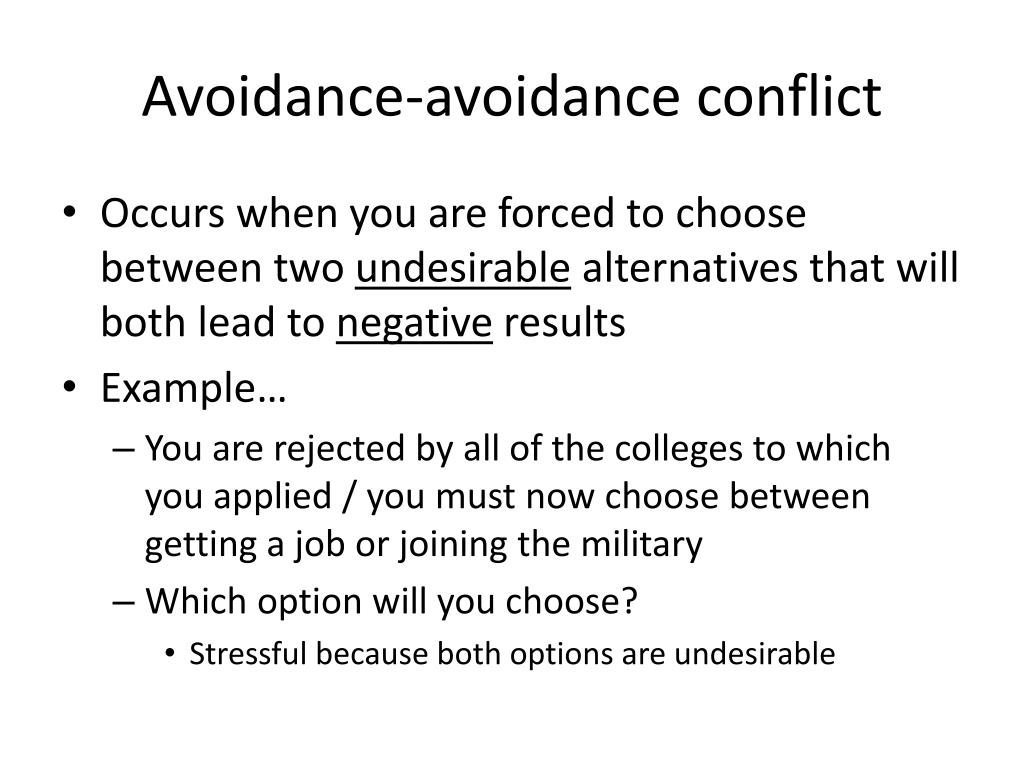
An avoidance-avoidance conflict occurs when an individual is faced with two undesirable choices, both of which they wish to avoid. It creates significant psychological distress and often leads to indecision or inaction because there is no clearly 'good' option. People feel trapped between two negative outcomes, struggling to pick the 'lesser of two evils' and this can cause significant stress. It's a common dilemma, causing mental paralysis.
Can you give an example of avoidance avoidance conflict?
Certainly. A classic example is having to choose between taking a difficult exam that you haven't studied for or failing the course entirely. Both outcomes are negative and undesirable. Another might be choosing between staying in an unhappy relationship or facing the loneliness of being single. In these scenarios, both options present consequences you desperately want to avoid, highlighting the painful nature of such decisions.
How does avoidance avoidance conflict affect mental health?
This type of conflict can significantly impact mental health by increasing stress, anxiety, and feelings of helplessness. Prolonged indecision can lead to chronic worry, emotional exhaustion, and even depression. The constant internal struggle between two unappealing options can erode one's sense of control and self-efficacy, making future decisions even harder. It's a really tough spot to be in, emotionally speaking.
Navigating Complex Choices
What are the different types of conflict in psychology?
In psychology, there are typically four main types of conflict: approach-approach, avoidance-avoidance, approach-avoidance, and double approach-avoidance. Approach-approach involves choosing between two desirable options. Avoidance-avoidance, as discussed, is choosing between two undesirable ones. Approach-avoidance is when a single goal has both positive and negative aspects. Double approach-avoidance involves choosing between two goals, each with both positive and negative aspects.
How do people typically resolve avoidance avoidance conflicts?
People often resolve these conflicts by re-evaluating the options to find one that is marginally less undesirable, or by trying to escape the situation entirely if possible. Sometimes, they might delay the decision, hoping circumstances change, though this can prolong distress. Seeking external advice, reframing the choices, or accepting a difficult outcome as a necessary step can also help. It's about finding the least painful path forward. Many people will procrastinate until one option becomes unavoidable, which is not ideal.
What is the role of stress in these conflicts?
Stress plays a central role in avoidance-avoidance conflicts, often escalating due to the perceived lack of a good solution. The pressure to choose between two negative outcomes creates significant psychological tension. High stress levels can impair judgment, making it even harder to make a rational decision and contributing to feelings of being overwhelmed. Reducing stress through coping mechanisms is vital for clearer thinking. The more stress, the harder the decision becomes, creating a vicious cycle.
Practical Strategies for Resolution
What are some effective coping mechanisms for avoidance avoidance situations?
Effective coping mechanisms include thoroughly analyzing the potential consequences of each negative option to identify the 'lesser evil.' Seeking support from trusted friends or professionals can provide new perspectives. Practicing mindfulness and stress-reduction techniques can help manage anxiety. Breaking down the problem into smaller, manageable parts can also make the decision feel less daunting. Focus on what you can control, even if it's just your reaction. Try to shift your perspective by focusing on the long-term impact rather than immediate discomfort.
How can I avoid getting into such conflicts in the future?
While completely avoiding all such conflicts might be impossible, you can minimize their frequency by developing strong decision-making skills and proactive planning. Identifying potential problems early allows for more options to emerge before the choices become strictly negative. Setting clear boundaries, understanding your priorities, and not procrastinating on minor issues can also help prevent situations from escalating into difficult avoidance-avoidance dilemmas. Being prepared is half the battle.
Still have questions? The most popular related answer often revolves around understanding the underlying psychological factors that make these choices so difficult in the first place, helping individuals gain a deeper insight into their own decision-making processes.Ever feel stuck between two bad choices? That's the essence of an avoidance-avoidance conflict in psychology. This detailed guide explores how these challenging situations arise, the psychological toll they take, and practical strategies for navigation. We delve into real-world examples, from career dilemmas to personal struggles, helping you understand this common human experience. Learn to recognize the signs, comprehend the underlying psychological mechanisms, and discover effective methods to resolve these frustrating impasses. Our insights are designed to be both informative and easy to grasp, offering valuable perspectives for anyone seeking to better manage tough decisions. You will find practical steps to help you move forward, transforming difficult choices into opportunities for growth and resilience. Understanding this conflict is a key step towards making more informed and less stressful life decisions.
Hey everyone, have you ever found yourself in a truly awful spot, facing two choices that both just feel terrible? Like, seriously, which bad choice do you even pick? That feeling, my friends, is exactly what we call an avoidance-avoidance conflict in psychology, and it’s a big deal. People often ask, "What exactly is an avoidance-avoidance conflict?" Well, it’s when you're forced to choose between two equally unappealing or threatening alternatives. There’s no good option; it’s basically choosing the 'lesser of two evils,' which still feels pretty awful. And honestly, it can leave you feeling totally paralyzed, unable to move forward at all. It's a common psychological dilemma that many of us face, often without even realizing there's a name for it. Understanding this concept really helps in seeing why some decisions feel so incredibly hard.
Think about it like this: you're trying to escape a situation, but every path leads to something you want to avoid. You can't just walk away from the whole thing without picking one of the unpleasant paths. I mean, it’s not exactly the glamorous life you see in magazines, right? It's more like a psychological trap, honestly, where both outcomes are undesirable. But identifying this type of conflict is the first major step in even beginning to unravel it, and that’s what we’re going to talk about today.
Understanding the Core of Avoidance Avoidance Conflict
So, let's dive a bit deeper into what really makes these conflicts tick. At its heart, an avoidance-avoidance conflict happens when you're caught between two negative goals or situations. Both options present significant disadvantages, and you’re motivated to avoid both of them equally. The problem is, you have to choose one. You can't just opt out entirely. This creates immense internal tension and often leads to a lot of procrastination or inaction. It’s like being stuck between a rock and a hard place, but the rocks are both equally sharp and uncomfortable. You really don't want to touch either one of them. This indecision can be incredibly draining, both emotionally and mentally, impacting your overall well-being. It’s important to acknowledge this feeling, rather than dismissing it.
A classic example often discussed involves a student who dislikes two courses equally, say, a difficult math class and a boring history seminar. They need to choose one to graduate, but both options are undesirable. The student wants to avoid both the hard work of math and the tedium of history. Another scenario could be a person who hates their job but fears unemployment even more. They want to avoid their current work situation, but they also desperately want to avoid the financial instability of not having a job. These scenarios illustrate the binding nature of this conflict. It truly highlights the difficult psychological pressure involved. Recognizing these patterns in your own life is crucial for managing them effectively.
Why Do We Get Stuck? The Psychological Dynamics
Honestly, getting stuck in an avoidance-avoidance conflict is super common, and there are some clear psychological reasons why it happens. One big factor is the equal negative valence of the choices. Both options are equally bad, so there's no clear 'better' option to pull you towards it. This lack of a positive pull makes it really tough to make a decision. Your brain is essentially screaming 'NO!' at both possibilities, creating a standstill. And that can be incredibly frustrating to experience. The mind seeks to minimize discomfort, but in this case, all paths lead to discomfort. This creates a challenging internal struggle that can feel overwhelming and endless. It’s like your internal compass is broken, unable to point you in a preferable direction. Many people simply don't know how to resolve such a deep seated emotional challenge. This often leads to a state of mental paralysis and increased anxiety. We really need strategies to navigate this difficult terrain effectively.
Another reason for getting stuck is fear of regret. We worry that if we pick one bad option, the other one might have been slightly less bad, and we’ll regret our choice forever. So, we end up choosing nothing, which often has its own negative consequences. The pressure to make the 'right' decision, even when all options are wrong, can be paralyzing. This feeling of being trapped is a significant part of the avoidance-avoidance experience. It affects everything from our mood to our productivity. In my experience, avoiding the decision actually makes the situation worse over time. It’s a vicious cycle that needs to be broken. That’s why figuring out how to approach these conflicts is so important for our mental health. It’s about taking control back. We often overlook the subtle ways these conflicts impact our daily choices and happiness. This understanding is key to developing better coping mechanisms. It’s all about empowering yourself to face these challenges head-on. Don’t just let them fester. This perspective really changes how we approach personal challenges. It shifts the focus from avoiding to actively managing. We can learn to make these tough calls with more confidence. This approach provides a clearer path forward in stressful circumstances.
Equal Negative Outcomes: Both choices are perceived as equally bad or undesirable, offering no clear 'better' alternative. This balance of negativity holds us in place.
Fear of Regret: The anxiety of choosing one negative outcome only to find the other might have been 'less bad' is a powerful immobilizer. It makes us hesitate to act.
Psychological Paralysis: The intense stress and indecision can lead to a state where no action is taken at all. This inaction often has its own negative repercussions.
Cognitive Dissonance: Our minds struggle with the inconsistency of being forced to choose between two things we want to avoid. This internal conflict is deeply unsettling.
How to Resolve Avoidance Avoidance Conflicts and Move Forward
Okay, so now that we know what this whole mess is, the big question is: how do we actually resolve it? It's not easy, but there are definitely strategies you can use to break free. The primary goal is to shift your perspective or find a way to reframe the choices. You can't always make a bad situation good, but you can sometimes make one option less bad, or find an entirely new, albeit difficult, path. This requires a proactive approach and a willingness to confront the discomfort. It’s about taking control of your narrative and actively seeking solutions. Sometimes, the mere act of taking a step, any step, can be incredibly liberating. It changes the dynamic from passive avoidance to active problem-solving. This change in mindset is often the most significant part of the journey. You really want to tackle this head-on for your peace of mind. Otherwise, it will just keep gnawing at you. It’s about empowering yourself to make the best possible choice given the circumstances. This approach can significantly reduce the mental burden of such difficult decisions.
1. Re-evaluate and Reframe Your Options
First things first, take a deep breath and truly look at your choices again. Are they *really* equally bad? Sometimes, when we're stressed, things seem worse than they are. Can you find any small silver lining, or perhaps one option has a slightly less severe long-term impact? Try to reframe one of the negative outcomes as a necessary stepping stone or a learning experience. Sometimes, changing your perspective can make one choice feel marginally more tolerable. This is about critical thinking, not just emotional reaction. It means looking beyond the immediate discomfort to potential future benefits, however small. Maybe one option, while still undesirable, leads to a quicker resolution. Perhaps it opens doors to new opportunities down the line. We often don't consider the subtle differences that might exist. Digging into the details can reveal a path forward. This analytical approach can turn overwhelming choices into manageable steps. It allows for a more rational assessment of the situation. You might uncover hidden advantages in one of the choices. This reframing is a powerful psychological tool. It helps reduce the immediate stress of the decision. That's a huge step toward solving the problem.
For instance, if you hate your job but fear unemployment, could you start a side hustle while employed? Or could you use your current job to save up aggressively for a short period, then quit? This reframing provides an alternative that wasn't immediately apparent. It changes the perceived
Key highlights
Avoidance-avoidance conflict involves choosing between two undesirable outcomes. It often leads to indecision, stress, and psychological discomfort. Understanding this conflict helps in developing coping mechanisms and resolution strategies. Recognizing personal triggers and patterns is crucial for managing these situations. Practical techniques like re-evaluating options and seeking support can reduce distress. Effective resolution enhances mental well-being and decision-making skills.
Gallery
PPT AP Psychology Powerpoint Presentation Free Download ID 2236041 Avoidance Conflict L Approach Fourweekmba The Nature Of Stress Chap New 728 2236041 Chapter Lecture Questions Section Pgs Avoidanceconflict What Is How To Overcome It Avoidant Step Version Deepstash 77413 1637804856 77413 1637804856 1957714 Types And Causes Resolution PPTX 2048 320 Luck Mindset Shapes Your Good Fortune Understanding Why Happens Address.
Conflict Powerpoint Templates Slides And Graphics Avoidance Example In Google Cpb SLIDE01 PPT Chapter Motivation Values Presentation Free Motivational Conflicts L PPTX 320 Types Of Learning Download ID 1709982 Approach CONFLICT2 CONFLICT2 Management The Ultimate Guide To Healthy O Introduction Tips For How Overcome What Causes AP Psychology 2236041 Signs 320 320 Clipart Maxresdefault Stress Frustration 320.
Avoiding Conflict Managing Interpersonal In The Workplace Avoidance What It Is Causes How To Overcome PPT Motivation Emotion Powerpoint Presentation Free Psychological Conflicts L Approach Definition Psychology Examples Meaning First Website Quiz Worksheet Study Com Definitions Types More 1757505051 Cognitive Learning Consumer Behaviour Math Chapter Download ID 1957714 Prevent And Avoid Lecture Questions Section Pgs Avoidanceconflict Stress 320 Of Avoidant Attachment Relationships At Chelsea Fick Blog Style.